Sumac Onion
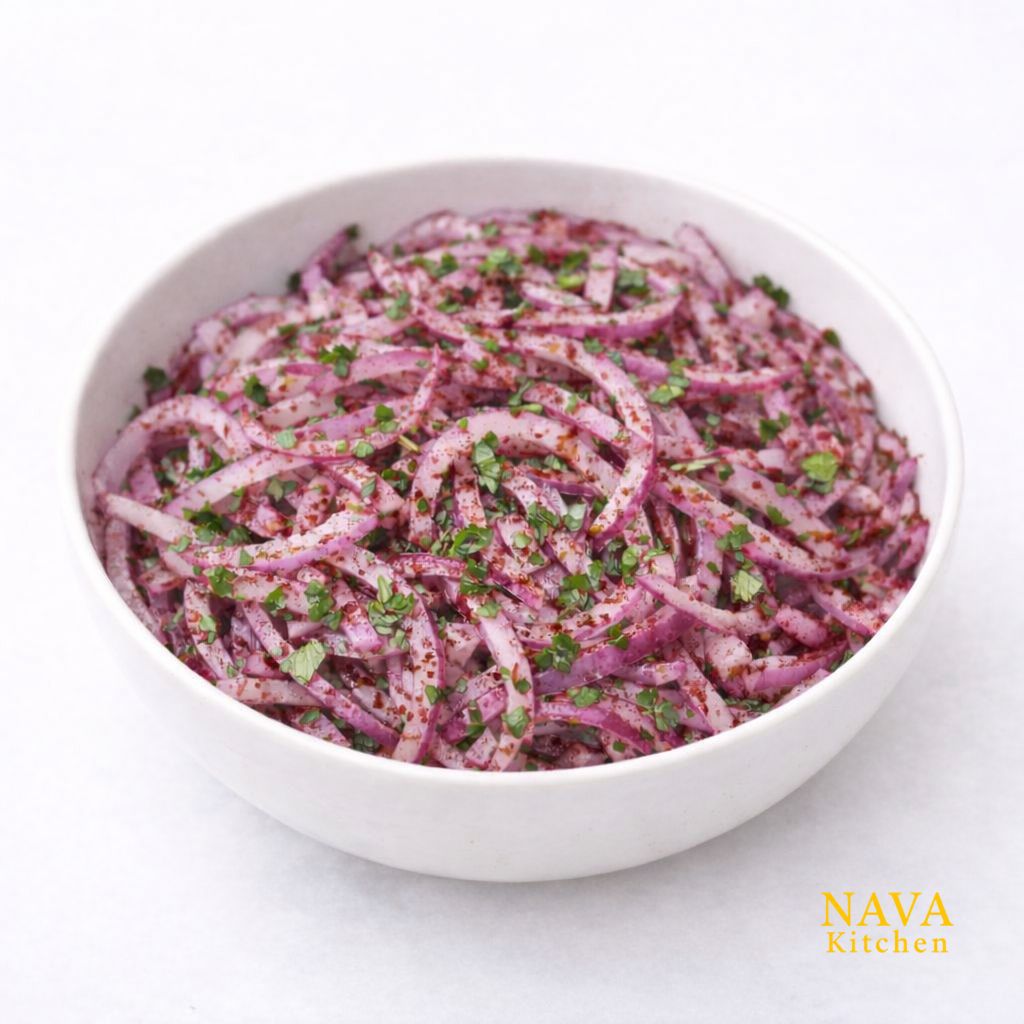
Ingredients:
- 1 red onion, medium, julienned
- 1 tbsp sumac
- ½ lemon, juice
- 1 tbsp olive oil
- 2 tbsp parsley, finely chopped
- Salt, to taste
Method:
Start Cooking- Slice the onion: Use a sharp knife or mandoline to cut into paper-thin half-moons.
- Optional soak: If raw onions feel too sharp, soak in cold water for 10–20 minutes. Drain and pat dry.
- Scrunch (crucial step): Place onions in a bowl with salt and sumac. Gently massage with your hands for 1–2 minutes until softened and lightly pink.
- Mix & marinate: Add parsley, lemon juice, and olive oil. Toss well to combine.
- Rest: Let sit 15–30 minutes so flavors meld before serving. Bon appétit.
Kitchen Tools:
Notes:
- If you find raw onions too sharp, soak the slices in cold water for 10–20 minutes, then drain and pat dry.
- You can use any onion, but red onions are preferred for their mild flavor, vibrant color, and antioxidant benefits, especially when served raw.
- Adjust the sumac, olive oil, lemon juice, and salt to suit your taste or diet.
- A pinch of chili flakes for heat.
- A splash of pomegranate molasses for depth.
- A few sliced cucumbers for crunch.
- Perfect with wraps, grilled chicken, kebabs, rice bowls, or tucked into warm pita.
Nutrition:
FROM THE PANTRY
Sumac
WHY WE LOVE IT
Quick to make and full of bright flavor, sumac onions add a fresh, tangy crunch that works as a topping, mezze, or simple side for almost any meal. They balance rich or grilled foods beautifully and fit just as easily into wraps, bowls, or sandwiches.
A LITTLE STORY
Before lemons were introduced to the Mediterranean, Romans and other ancient cultures used sumac as their primary souring agent. Romans and Persians utilized sumac for its antimicrobial properties to preserve food, while Native Americans used related species for tea and medicine. It has long been a staple on the Turkish, Iranian, and Levantine dinner tables, often sitting alongside salt and pepper.
DID YOU KNOW?
While often called a berry, sumac is a drupe that grows in cone-shaped clusters on bushes (Rhus coriaria).
Sumac is rich in antioxidants and offers natural anti-inflammatory benefits.
Though in the same family as poison ivy, the culinary red sumac is safe to eat (unlike white-berried varieties).