Easy Lahmacun (Turkish Meat Flatbread)
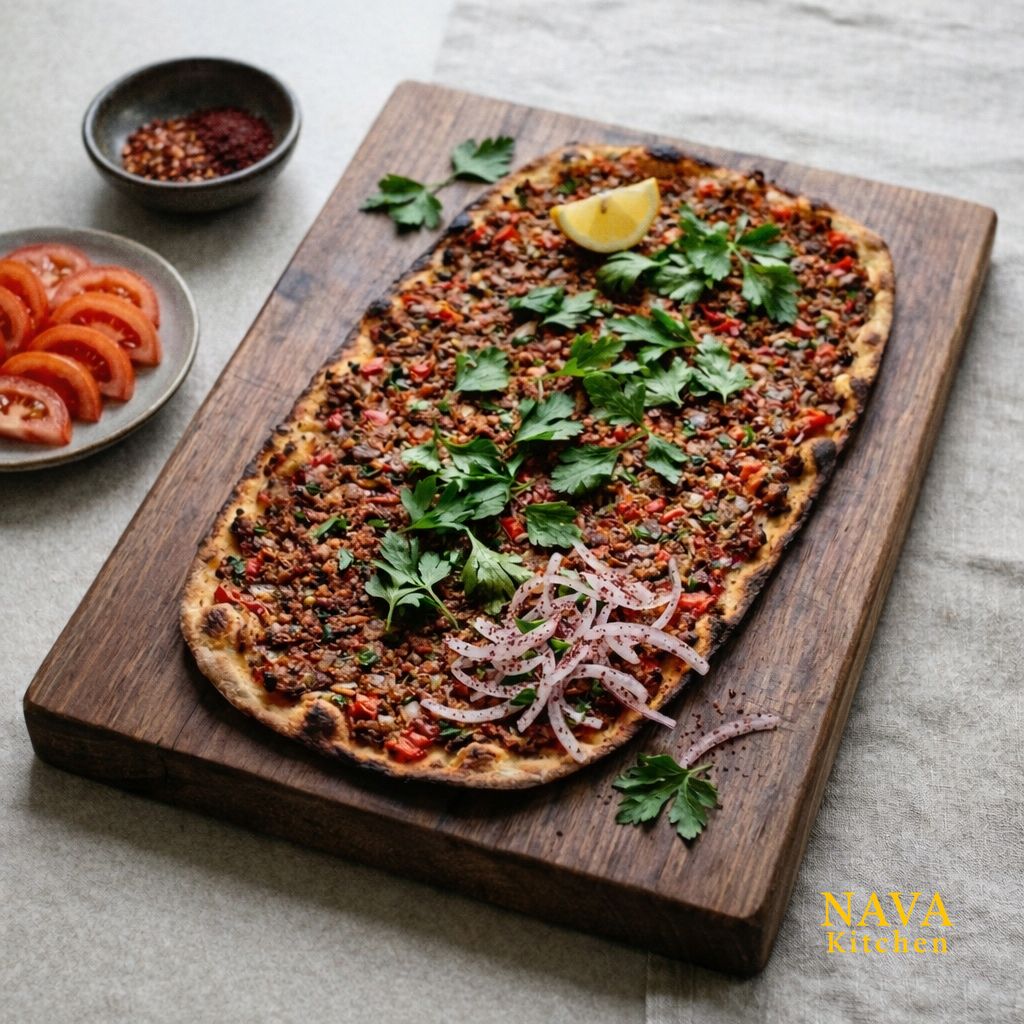
Ingredients:
- 1 lb. ground beef, 90/10 works well
- 1 yellow onion, medium
- 1 red bell pepper
- 1 green pepper
- 2 garlic cloves
- 2 tomatoes, medium, soft
- ½ bunch fresh parsley
- 1 tbsp tomato paste
- 1 tbsp red pepper paste
- 2 tbsp olive oil
- 2 –3 tbsp water, if needed
- 1½ tsp salt
- ½ black pepper
- 2 tsp paprika
- ½ tsp cumin
- Lavash bread, thin
Method:
Start Cooking- Place the ground beef in a large mixing bowl.
- Pulse the onion in a food processor until very finely minced. Transfer the onion to a fine-mesh sieve and gently press with the back of a spoon to remove excess liquid. Do not squeeze it dry — just release the extra juice. Add the onion to the bowl with the beef.
- Pulse the red pepper, green pepper, garlic, and tomatoes until very fine but not liquid. Do not drain. Add them directly to the bowl.
- Add to the bowl: parsley, tomato paste, red pepper paste, olive oil, salt, black pepper, paprika, and cumin. Mix thoroughly with your hands until fully combined.
- The mixture should be soft and spreadable. If it feels too thick, add 1 tablespoon water at a time, mixing after each addition, until it spreads easily. Do not make it runny.
- You can spread and bake immediately. For deeper flavor, cover and refrigerate the mixture for 20–30 minutes before using.
- Preheat the oven to 450°F.
- Place lavash on a baking sheet. Spread the meat mixture evenly over the surface in a generous, even layer, reaching close to the edges. Avoid making the center too thick so it cooks evenly.
- Bake for 8–10 minutes, or until the meat is fully browned, no pink remains in the center, and the edges are lightly crisp.
- Serve immediately with optional lemon wedges, fresh parsley, thinly sliced tomatoes, and red onions tossed with sumac. Bon appétit.
Kitchen Tools:
- Baking sheet with lined parchment
Notes:
- Finely process the vegetables so the mixture is smooth and easily spreadable, not chunky.
- Gently pressing the onion removes excess sharp juice while keeping enough moisture for balance.
- Spread the topping evenly so it cooks through at the same time. Avoid thick spots in the center.
- Bake at high heat for a short time. Since lavash is already baked, overbaking can cause it to become dry or brittle.
- If baking multiple trays, rotate once for even browning.
- 3 cups flour
- 1 cup lukewarm water
- 1 tsp instant dry yeast
- 1 tsp salt
- 1 tsp sugar
- 1–2 tbsp olive oil (optional, for softer dough)
- In a bowl, mix lukewarm water, sugar, and yeast. Let sit 5–10 minutes until slightly frothy. (If using instant yeast, you may mix it directly with the flour.)
- Add flour, salt, and olive oil (if using). Mix until a dough forms.
- Knead 5–8 minutes until smooth and elastic.
- Place in a lightly greased bowl, cover, and let rise about 1 hour, until doubled.
- Punch down, divide into 8–12 balls, cover, and rest 15–30 minutes.
- Roll each ball very thin before adding the topping.
- 3 cups flour
- 1 tsp salt
- 1 cup water
- Mix flour and salt.
- Gradually add water and mix until a dough forms.
- Knead about 5 minutes until smooth.
- Cover and rest 20 minutes.
- Divide into balls and roll very thin.
- Use half beef and half ground lamb for a richer flavor.
- Add a pinch of red crushed pepper for a little heat.
- Serve warm with lemon wedges, fresh parsley, sliced tomatoes, and red onions tossed with sumac.
- Sprinkle with red crushed pepper if desired.
- Roll it up before eating, that’s part of the experience. The juices and herbs come together in every bite.
- Best enjoyed fresh from the oven while the edges are still lightly crisp.
Nutrition:
FROM THE PANTRY
Lahmacun
WHY WE LOVE IT
Lahmacun begins with paper-thin dough topped with a finely seasoned mince of meat and vegetables. Baked at high heat, the edges turn lightly crisp while the topping gently caramelizes, concentrating its savory richness while remaining light enough to enjoy more than one.
Fresh herbs, sharp onions, and a squeeze of lemon are added just before rolling it into a warm, handheld wrap. Each bite balances crisp texture, savory warmth, and bright acidity.
Lahmacun is rarely eaten alone. In its homelands, it is often ordered by the dozen and shared around lively tables. Made for big gatherings, loud conversations, and messy hands. It embodies a simple, generous style of hospitality that feels both timeless and effortless.
A LITTLE STORY
Lahmacun traces its roots to the eastern Mediterranean and ancient Mesopotamia, where flatbreads topped with seasoned meat were baked on hot stone surfaces.
Its name comes from the Arabic phrase lahm bi’ajeen, meaning “meat with dough.”
The dish became especially popular in southeastern Turkey during the Ottoman era, particularly in cities such as Gaziantep and Şanlıurfa. It later spread across Turkey in the mid-20th century as regional cuisines became more widely shared.
DID YOU KNOW?
Lahmacun is often called “Turkish pizza,” but traditional versions never include cheese.
In the late 19th century, Ottoman immigrants brought the dish to South America, where it evolved into a popular local snack known as sfiha in Argentina and Brazil.
There is a miniature version called fındık lahmacun (“hazelnut lahmacun”) typically served as a small appetizer before a main course.