Stewed Green Beans
Slowly stewed green beans with tomatoes, garlic, and olive oil until tender. A light, comforting dish that can be served warm or at room temperature, as a side or a simple main.
Servings: 2
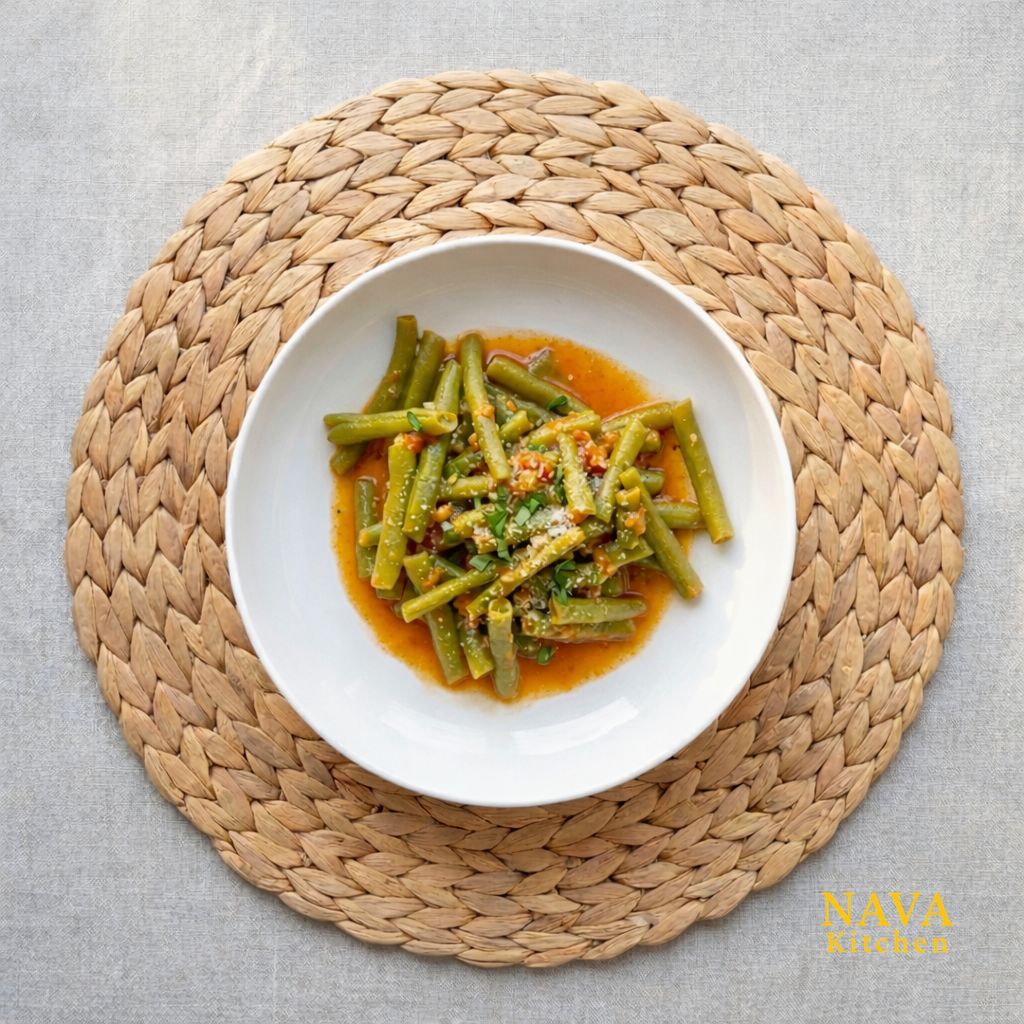
Ingredients:
- 1 lb. green beans
- 2 tomatoes, medium, peeled and finely diced
- 3 tbsp tomato sauce
- 2 tbsp olive oil
- 2 garlic cloves, minced
- 1 onion, small, peeled, whole
- 1 tsp salt
- 1 tsp sugar
- 1 cup water
Method:
Start Cooking- Trim the green beans by cutting off the small stem tip and the thin tail on the other end. If the beans are long, break or cut them into 2–3 pieces depending on their size so they cook evenly and are easier to eat. Place the trimmed beans in a colander, rinse well under cold water, and drain.
- Heat the olive oil in a wide pot over medium heat. Add the minced garlic and cook for about 30 seconds until fragrant.
- Add the diced tomatoes and tomato sauce. Cook for about 3–4 minutes, until the tomatoes begin to soften and release their juices.
- Add the green beans, salt, and sugar. Pour in the water and bring to a gentle simmer.
- Place the whole peeled onion in the middle of the beans, gently pressing it down so it sits partially in the sauce.
- Cover the pot and cook on low heat for about 35–45 minutes, until the beans are very tender.
- After about 15–20 minutes of cooking, remove the onion from the pot and discard it.
- Let the dish rest for about 10–15 minutes before serving. Bon appétit.
Kitchen Tools:
- Large heavy-bottomed pot or large sauté pan
Notes:
From the kitchen
- Trim the ends of the beans by cutting off the small stem tip and the thin tail. Instead of cutting the beans with a knife, you can simply snap them by hand into 2–3 pieces depending on their size. Breaking them is quick, natural, and often easier than cutting.
- Placing the onion whole in the middle of the pot gently flavors the dish without overpowering it. Removing it later keeps the texture clean and the sauce light.
If you prefer, you can finely dice the onion and leave it in the dish instead of removing it. - If you prefer a more saucy dish, keep the full 1 cup water and cook covered for about 35–40 minutes until the beans are tender.
- If you prefer less sauce, cook the beans uncovered for an additional 10 minutes at the end so the liquid reduces slightly.
- Add an extra clove or two of garlic if you prefer a stronger garlic flavor.
- Use grated fresh tomatoes instead of diced tomatoes for a smoother sauce.
- Use cherry tomatoes for a slightly sweeter flavor.
- You can julienne the onion and leave it in the dish instead of removing it.
- Serve warm, room temperature, or chilled with crusty bread.
- Pairs well with rice, yogurt dishes, grilled meats, or other Mediterranean mezze.
Your notes stay on this device for now. Log in to keep them with your account and access them anytime.
Nutrition:
Calories: 263 kcal | Carbohydrates: 30 g | Protein: 8 g | Fat: 15 g | Saturated Fat: 2 g | Polyunsaturated Fat: 2 g | Monounsaturated Fat: 10 g | Cholesterol: 4 mg | Sodium: 309 mg | Potassium: 965 mg | Fiber: 9 g | Sugar: 16 g | Vitamin A: 2692 IU | Vitamin C: 51 mg | Calcium: 125 mg | Iron: 3 mg
Share your plate
Mention @thenavakitchen or tag #thenavakitchen!FROM THE PANTRY
Green beans
WHY WE LOVE IT
Green beans are tender, mild, and incredibly versatile. They absorb flavors beautifully and work well in sautés, salads, stews, and simple olive oil dishes.
A LITTLE STORY
Because they grow from a flower and contain seeds, green beans are technically classified as a fruit, specifically a type of legume. Despite that, they are treated as a vegetable in everyday cooking and are one of the most popular garden vegetables, following tomatoes and peppers.
DID YOU KNOW?
Green beans are rich in vitamins C, K, A, and B3 (niacin) and provide minerals such as calcium, iron, potassium, phosphorus, and zinc. They are also high in fiber and offer a small amount of plant protein.