Baked Feta Pasta
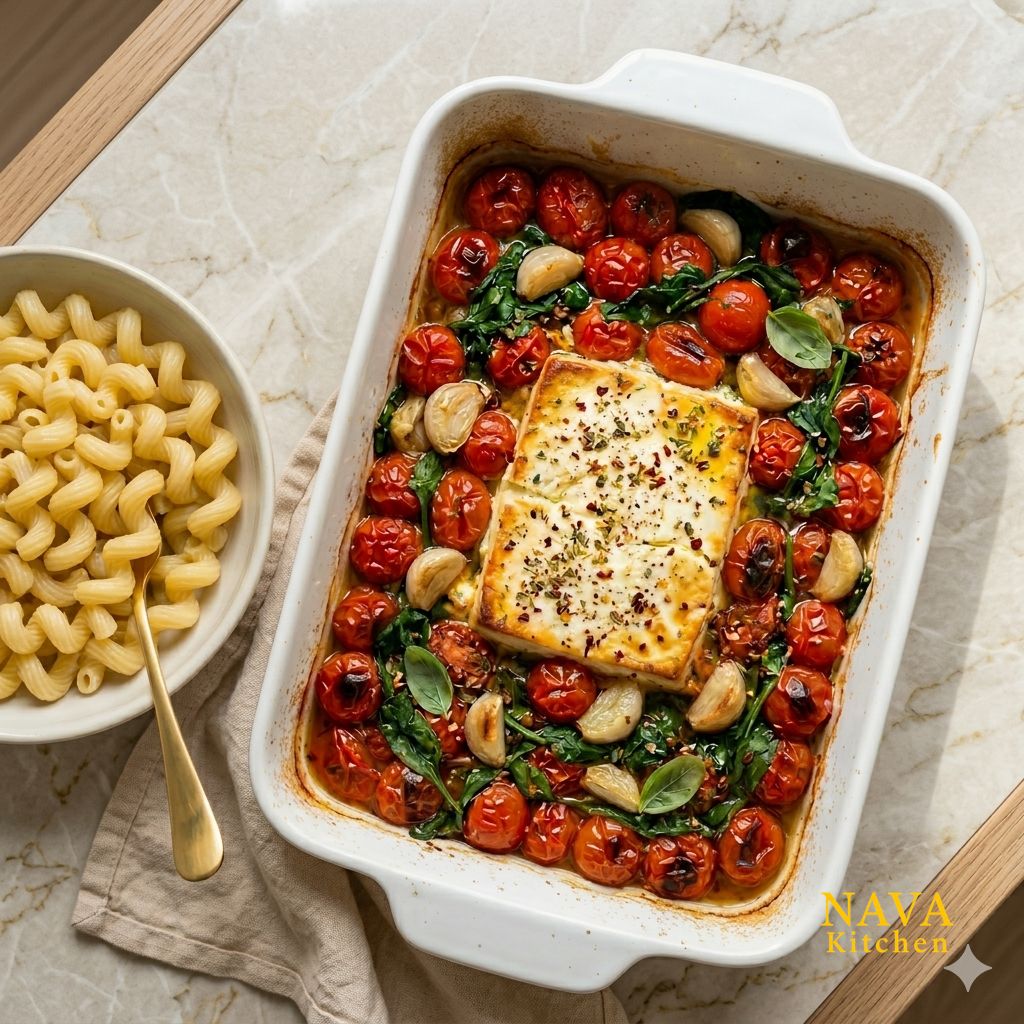
Ingredients:
- 1 lb. dried pasta, 16 oz standard packet
- 1 lb. full-fat feta cheese, 16 oz
- 1½ lb. cherry or grape tomatoes, about 24 oz or 2 pints
- 4 cups fresh baby spinach, about 4–5 oz
- 6 cloves, peeled
- 5 tbsp extra-virgin olive oil
- ½ tsp salt
- ½ tsp black pepper
- 1 tsp paprika
Method:
Start Cooking- Heat the oven to 400°F (200°C). In a large 9×13 baking dish, toss the cherry tomatoes, garlic, olive oil, salt, black pepper, and paprika until evenly coated.
- Create space in the center of the dish and place the feta blocks side by side among the tomatoes.
- Bake for 30–35 minutes, until the tomatoes burst and the feta becomes soft and lightly golden.
- Meanwhile, cook the pasta in well-salted water until al dente. Before draining, reserve 1 cup of the pasta cooking water.
- Remove the baking dish from the oven. Use a fork to mash the roasted tomatoes and feta together until creamy.
- Add the spinach to the hot sauce and stir until wilted.
- Add the cooked pasta and toss well. Stir in a little reserved pasta water as needed until the sauce becomes silky and coats the pasta.
- Serve warm. Bon appétit.
Kitchen Tools:
Notes:
- Use block feta rather than crumbled for the creamiest texture.
- The cheese softens and blends better with the roasted tomatoes.
- If the sauce feels too thick after mixing with the pasta, add a little reserved pasta water to loosen it and create a smooth, glossy finish.
- Short pasta shapes work best because they catch the creamy feta and roasted tomato sauce. Cavatappi, rotini, or penne are great choices, but any short pasta will work.
- Add sliced onion or mushrooms to the baking dish with the tomatoes for extra depth.
- Stir in red pepper flakes if you like a little heat.
- Fresh basil, parsley, or lemon zest added at the end brightens the rich feta sauce.
- Enjoy on its own or serve warm with a simple green salad or roasted vegetables.
Nutrition:
FROM THE PANTRY
Feta
WHY WE LOVE IT
Feta (white cheese) is loved for its bright, tangy flavor and its texture that is both crumbly and creamy. It brings saltiness and richness to dishes without feeling too heavy and has long been a nutrient-dense staple in Mediterranean cooking.
A LITTLE STORY
Feta is one of the oldest cheeses in the world. While Homer’s Odyssey in Greece (8th century BCE) provided the world’s first written record of white cheese, archaeological evidence from Çatalhöyük (c. 5900 BCE) shows that the craft was born in Anatolia, modern-day Türkiye nearly 5,000 years earlier. Today, Turkish white cheese (beyaz peynir) preserves this ancient tradition with varieties made from sheep, goat, or cow milk, while Greek feta has become a strictly defined, sheep-milk-dominant global icon.
DID YOU KNOW?
The name feta comes from the Italian word fetta, meaning “slice,” referring to how the cheese was traditionally cut and stored in brine-filled barrels.
The name “feta” first appears in historical sources in the 1600s during the Ottoman period, when Italian, especially Venetian, trade influence in the eastern Mediterranean was strong.
Aging in brine gives feta its distinctive salty, tangy flavor.