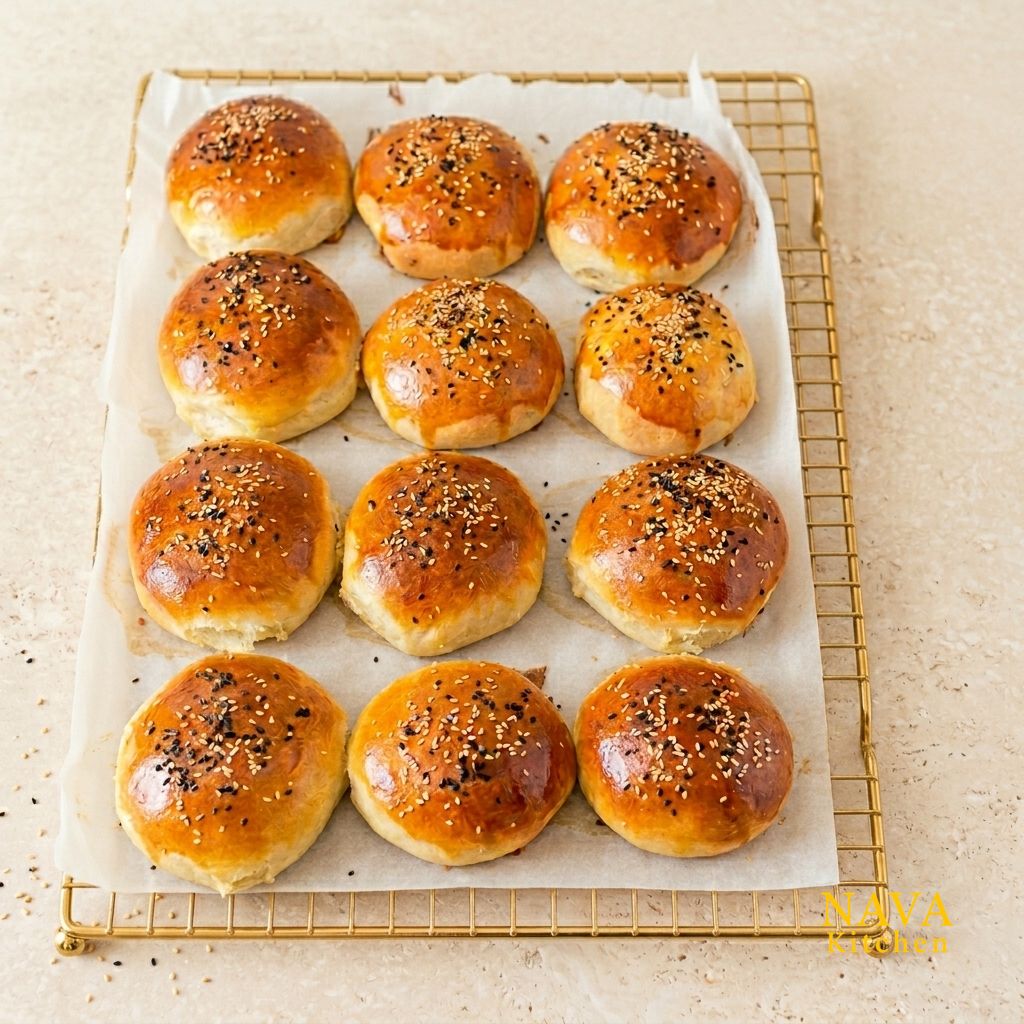
Soft Yogurt Buns (Pogaca)
Ingredients:
- 1 cup warm milk
- 1 cup yogurt
- ⅔ cup oil
- 2 tbsp butter, softened
- 2 egg whites, yolks reserved for topping
- 1 tbsp instant yeast
- 2 tsp sugar
- 2½ tsp salt
- 4½ cups flour, add gradually
Method:
Start Cooking- In a large bowl, combine: warm milk, yogurt, sugar, instant yeast. Stir gently.
- Add: egg whites, oil, butter. Mix until smooth.
- Add: flour and salt. Mix until combined.
- Gradually add remaining flour until dough becomes: soft, smooth, slightly tacky, not wet, not stiff.
- Knead for 8-10 minutes, until elastic and smooth.
- Cover with plastic wrap or a kitchen towel.
- Let rise for 60-75 minutes, until puffy and nearly doubled.
- Line a baking tray with parchment paper.
- Divide the dough and shape as desired: filled buns, plain rolls, sandwich-style buns.
- Place shaped dough on the prepared tray.
- Cover lightly and let rise 25-35 minutes, until puffy.
- Brush with reserved egg yolks. Sprinkle with sesame or nigella seeds, if desired.
- Bake at 375°F (190°C) for 20-22 minutes, until golden. Bon appétit.
Kitchen Tools:
- Baking sheet lined with parchment
- Kitchen towel or plastic wrap
- Stand mixer with dough hook, optional
Notes:
- Yogurt creates a softer, richer dough with a tender crumb.
- Instant yeast can be mixed directly into the liquids.
- Use warm, not hot ingredients.
- Add flour gradually to avoid a dense dough.
- Dough should feel soft and slightly tacky.
- This dough may rise slower due to richness — give it time.
- Do not underbake.
- Cover lightly after baking for extra softness.
- Toppings: egg yolk, sesame, nigella, shredded cheese.
- Fillings: feta and parsley, mashed potato, mozzarella, sliced hot dog, ground beef (cooked & cooled), olive paste.
- Shapes: round buns, filled pogaca, sandwich rolls.
- Serve warm or at room temperature.
- Perfect for breakfast, tea time, lunchboxes, or served as soft sandwich bread.
- Freezes well and reheats beautifully.
Nutrition:
FROM THE PANTRY
Pogaca
WHY WE LOVE IT
Pogaca is one of those baked goods that fits any moment of the day. It can be soft and simple or filled and more satisfying, making it just as good for breakfast as it is for lunchboxes or a quick snack. The dough is flexible, easy to shape, and always rewarding.
A LITTLE STORY
Pogaca is a staple in Turkish home kitchens and bakeries. It is commonly served for breakfast and tea time, often alongside cheese, olives, and tea. Over time, many variations developed, using ingredients like yogurt, butter, or oil, each giving the dough a slightly different texture and richness.
DID YOU KNOW?
Pogaca dough can change significantly with small ingredient swaps. Adding yogurt creates a softer and more tender crumb, while using more oil results in a lighter, more airy texture. This is why there are so many versions, each with its own character.