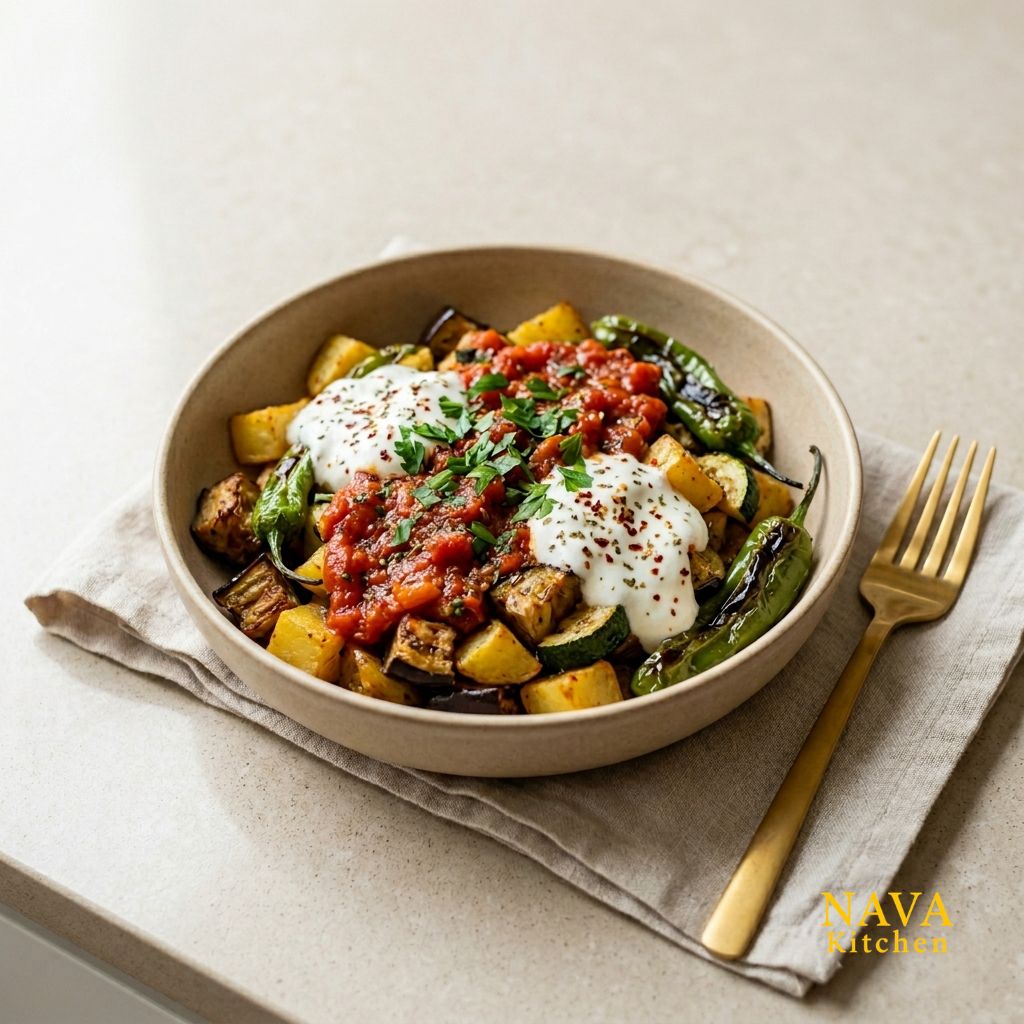
Roasted Vegetables
Ingredients:
- 2 eggplants, medium
- 2 zucchini
- 2 potatoes, cut smaller
- 12 oz Shishito peppers
- 6 tbsp olive oil
- Salt
- Black pepper, freshly ground, optional
- 4 tomatoes, grated
- 2 tbsp olive oil
- 2 cloves garlic, minced
- Salt
- Pinch of sugar, optional, balances acidity if tomatoes are sharp
- 2 cup yogurt
- 2 garlic clove, pressed
- ½ tsp salt
Method:
Start Cooking- Cube eggplant, zucchini, and potatoes (cut potatoes slightly smaller).
- Keep Shishito peppers whole (12 oz, stems on).
- Tray 1: potatoes + eggplant.
- Tray 2: zucchini + Shishito peppers.
- Toss each tray separately with olive oil and salt.
- Start Tray 1 → roast 20 minutes.
- Add Tray 2 → roast both 10–15 minutes more.
- Potatoes + eggplant: ~30–35 minutes.
- Zucchini + peppers: ~10–15 minutes.
- Heat 2 tbsp olive oil.
- Add garlic, sauté briefly.
- Add grated tomatoes and salt.
- Simmer 10–15 minutes until slightly thick.
- Mix yogurt, garlic, and salt.
- Arrange roasted vegetables on a plate.
- Spoon tomato sauce over.
- Add yogurt on top or serve alongside. Bon appétit.
Kitchen Tools:
- Baking sheet lined with parchment
Notes:
- Roast vegetables in a single layer to prevent steaming.
- Use two trays to keep textures balanced and avoid overcrowding.
- Cut vegetables evenly for consistent cooking.
- If using one baking sheet, add zucchini and peppers later to prevent overcooking.
- Keep Shishito peppers whole for better texture and presentation.
- Traditional version: Fry each vegetable separately in oil for a richer, classic texture.
- Use Cubanelle or long green peppers instead of Shishito.
- Add red bell peppers sweetness and color.
- Add finely chopped onion to the tomato sauce for a deeper flavor.
- Cut vegetables into rounds instead of cubes.
- Skip yogurt if you prefer.
- Serve warm or at room temperature.
- Pair with fresh bread to scoop the sauce and yogurt.
- Works as a light main or a side alongside grilled meat or chicken.
Nutrition:
FROM THE PANTRY
Kızartma: A Turkish Classic
WHY WE LOVE IT
Turkish Kizartma is essentially a celebration of summer vegetables, traditionally featuring fried eggplant, zucchini, peppers, and potatoes topped with a garlic-yogurt or tomato sauce.
It is the ultimate comfort food because it perfectly balances the richness of fried vegetables with the sharp, refreshing bite of garlic yogurt. It’s also incredibly versatile, tasting just as delicious hot from the pan as it does cold the next day as a meze.
A LITTLE STORY
In Turkish cuisine, a dish known as “kızartma” refers to vegetables that are traditionally fried in oil and served with tomato sauce and yogurt. This version takes inspiration from that classic, using roasting instead for a lighter approach.
Historically, kizartma became a beloved tradition in Ottoman and rural Turkish kitchens as a way to highlight the peak harvest of seasonal garden vegetables. Families often gathered for “kizartma nights” where the sound of sizzling oil and the smell of roasting peppers signaled the height of the summer season.
DID YOU KNOW?
Shishito peppers are usually mild, but occasionally one can be surprisingly spicy. It’s part of their charm and makes each bite a little different.
While it seems simple, a true kizartma is a test of patience because each vegetable must be fried separately to respect its individual cooking time and texture. In many Turkish households, the dish isn’t considered complete without “Sivri” peppers—long, slender green peppers that provide a signature smoky heat to the mix.