Chicken Fried Rice
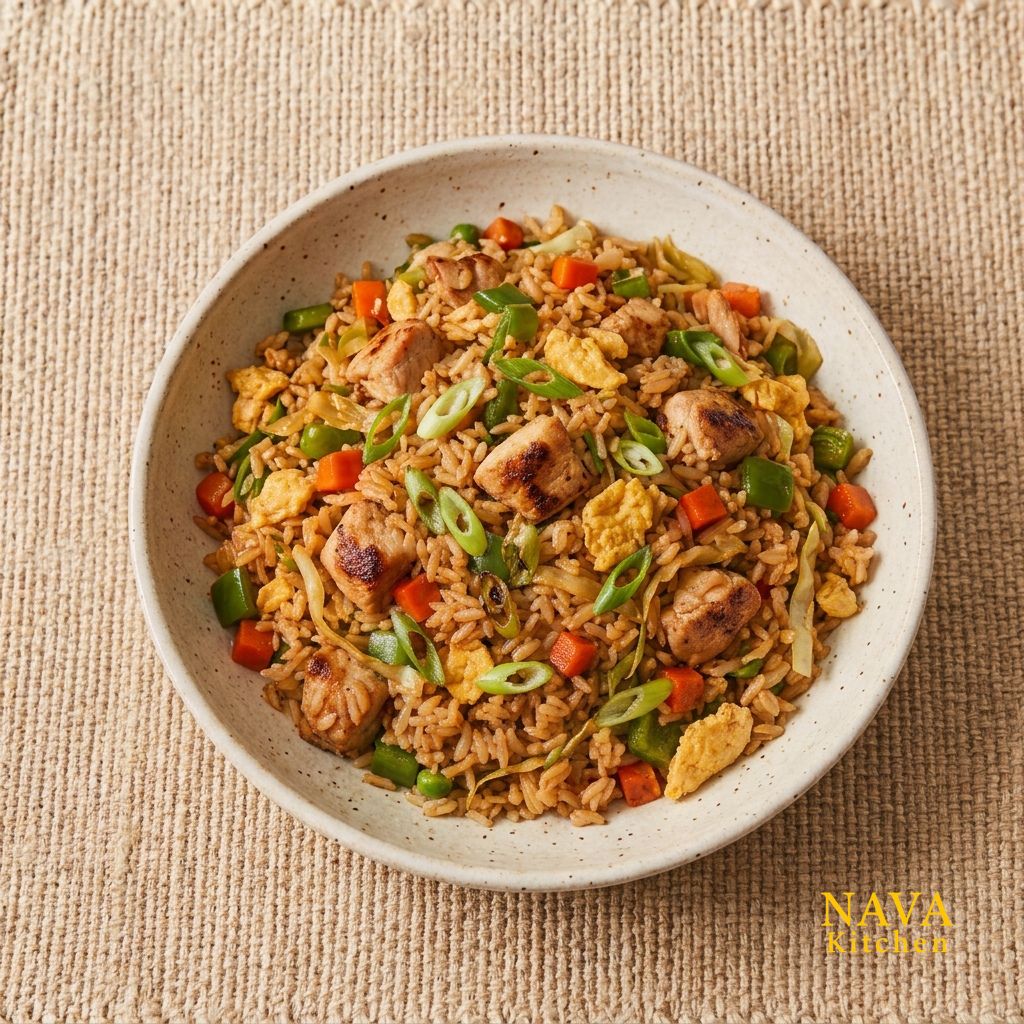
Ingredients:
- 1 lb. cooked rice, preferably cold (about 3 cups cooked, from 1 cup uncooked rice)
- 1 lb. chicken breast, thinly sliced
- 3 eggs
- 1 cup green onions, sliced
- 1 carrot, thinly sliced or julienned
- 1 green bell pepper, thinly sliced
- 1 cup shredded cabbage
- 4 garlic, minced
- 3 tbsp soy sauce
- ½ pepper, divided
- Salt, as needed
- 4 tbsp avocado oil, if the rice was cooked without butter or oil
- 2 tbsp avocado oil, if the rice was already cooked with butter or oil
Method:
Start Cooking- Heat a little of the oil in a large skillet or wok over medium-high heat. Add about half of the green onions and sauté briefly. Add the beaten eggs, lightly seasoned with salt and pepper. Scramble until just cooked, then remove and set aside.
- Add a little more oil to the same pan. Add the garlic and cook for 20 to 30 seconds. Add the chicken, a little salt, black pepper, and 1 tablespoon soy sauce. Cook over medium heat until the chicken is fully cooked and lightly browned. Remove and set aside.
- Add the carrot, bell pepper, and cabbage to the same pan. Stir-fry over high heat, uncovered, for a few minutes until tender but still slightly crisp. Add 1 tablespoon soy sauce and a little black pepper.
- Add the cold cooked rice and break up any clumps. Add the remaining 1 tablespoon soy sauce. Stir-fry over high heat, occasionally letting the rice sit against the hot pan for 30 to 60 seconds before stirring.
- Return the chicken and eggs to the pan. Add the remaining green onions and toss everything together until hot and evenly combined.
- Taste and add extra soy sauce, pepper, or salt only if needed.
- Serve warm. Bon appétit!
Kitchen Tools:
- Large wok or large nonstick skillet
Notes:
- Cold rice works best for fried rice because it stays separate and fries instead of turning soft.
- For this recipe, 1 cup uncooked rice will give you about 1 lb. cooked rice.
- If possible, cook the rice ahead of time and refrigerate it before using.
- Add 1 teaspoon toasted sesame oil at the end for extra depth.
- Swap the chicken for shrimp, beef, or tofu.
- You can also add peas, corn, mushrooms, or any other quick-cooking vegetables you have on hand.
- Add a drizzle of chili crisp for heat, swap black pepper for white pepper for a more classic fried rice flavor, or sauté a little fresh ginger with the garlic.
-
Serve it on its own or pair it with a simple cucumber salad.
Nutrition:
FROM THE PANTRY
Soy sauce
WHY WE LOVE IT
Soy sauce brings deep savory flavor that makes everything from steak to vegetables taste richer and more satisfying.
Salty, slightly sweet, and full of depth, it can bring a simple dish together with just a splash.
A LITTLE STORY
Soy sauce traces its roots to China more than 2,000 years ago, developing from early fermented sauces and pastes used to preserve food and make valuable salt go further.
As vegetarian cooking spread through Buddhist communities, soybean-based seasonings became an important alternative to meat-based sauces.
Soy sauce later spread throughout East Asia, including Japan, where shoyu developed into its own distinctive style. European traders eventually carried Japanese soy sauce farther around the world.
DID YOU KNOW?
Traditionally brewed soy sauce can ferment for months or even longer. Aspergillus oryzae, known as koji mold, plays an important role in developing its flavor.
Some commercially produced versions use acid-hydrolyzed vegetable protein to speed up production rather than relying entirely on traditional fermentation.
Soy sauce comes in a surprisingly wide range of varieties, from light and delicate to dark, rich, sweet, or intensely savory.