Soft Buns
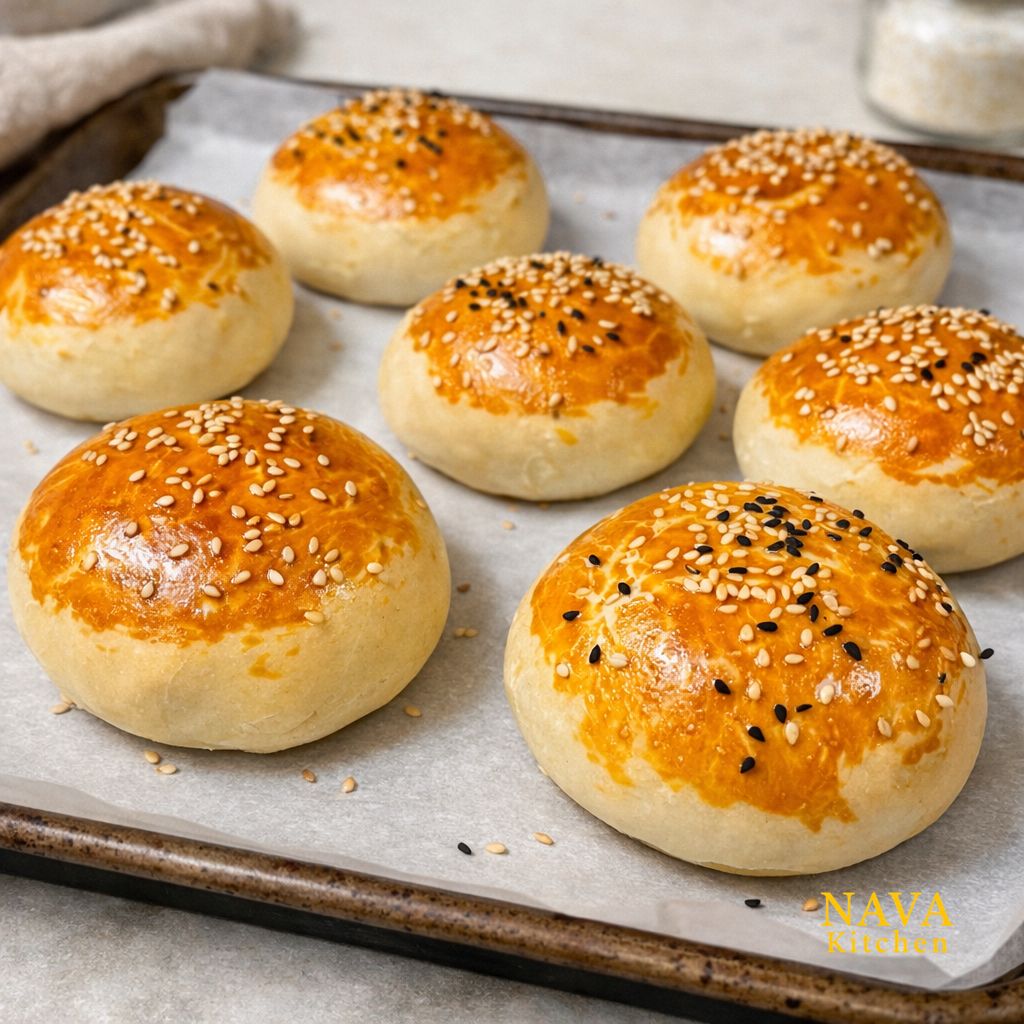
This savory, light, and fluffy dough is a versatile base for rolls, filled pastries, and sandwich buns. Made without butter and lightly balanced with sugar and salt, it delivers a clean, soft crumb that works beautifully with both simple and hearty fillings.
Servings: 20
Ingredients:
- 1 cup warm milk
- 1 cup warm water
- 1 cup oil
- 2 egg whites, yolks reserved for topping
- 1 tbsp instant yeast
- 2 tsp sugar
- 2 ½ tsp salt
- 6 cups flour, add gradually
Method:
Start CookingMix the Liquids
- In a large bowl, combine: warm milk, warm water, sugar, instant yeast. Stir to dissolve.
- Add: egg whites, oil. Mix until smooth.
Add the Flour
- Add: 5 cups flour, salt. Mix until combined.
- Gradually add the remaining flour until the dough becomes: soft, smooth, slightly tacky, not wet, not stiff.
- Knead for 6–8 minutes, until elastic and smooth.
First Rise
- Cover with plastic wrap or a kitchen towel.
- Let rise for 45–60 minutes, until doubled in size.
Shape
- Line a baking tray with parchment paper.
- Divide the dough and shape as desired: filled pastry, plain rolls, braided bread, sandwich buns.
- Place shaped dough on the prepared tray.
Second Rise
- Cover lightly and let rise 20–30 minutes, until puffy and slightly expanded.
Bake
- Brush the tops with reserved egg yolks. Sprinkle with sesame or nigella seeds, if desired.
- Bake at 350°F (175°C) for 18–22 minutes, until golden. Do not underbake. Bon appétit.
Kitchen Tools:
- Baking sheet with lined parchment
- Kitchen towel or plastic wrap
- Stand mixer with dough hook, optional
Notes:
From the kitchen
- Instant yeast can be mixed directly into warm liquids.
- Use warm, not hot liquids to protect the yeast.
- Add flour gradually to avoid a stiff dough.
- The dough should feel soft and slightly tacky, never wet.
- For best results, let the dough rise until doubled in size before shaping.
- Do not underbake — fully baked rolls prevent gumminess.
- Cover loosely after baking for extra softness.
- Topping options: Egg yolk (for brushing), sesame seeds, nigella seeds, shredded mozzarella, everything seasoning.
- Filling options: seasoned mashed potato, feta and parsley, mozzarella, sliced hot dog, ground beef (cooked & cooled), spiced beef filling.
- Shapes: round rolls, oval sandwich buns, braided loaf, pull-apart tray rolls.
- For a buttery flavor, use ½ cup melted butter and ½ cup oil instead of 1 cup oil.
- Serve warm or at room temperature.
- Perfect for lunchboxes, breakfast spreads, or as sandwich bread.
- Freezes beautifully and reheats like freshly baked.
Your notes stay on this device for now. Log in to keep them with your account and access them anytime.
Nutrition:
Calories: 248 kcal | Carbohydrates: 30 g | Protein: 5 g | Fat: 12 g | Saturated Fat: 1 g | Polyunsaturated Fat: 3 g | Monounsaturated Fat: 7 g | Trans Fat: 0.04 g | Cholesterol: 2 mg | Sodium: 54 mg | Potassium: 74 mg | Fiber: 1 g | Sugar: 1 g | Vitamin A: 21 IU | Vitamin C: 0.02 mg | Calcium: 22 mg | Iron: 2 mg
Share your plate
Mention @thenavakitchen or tag #thenavakitchen!FROM THE PANTRY
Yeast
WHY WE LOVE IT
Through fermentation, it transforms simple dough into soft, airy bread, developing depth of flavor and the unmistakable aroma of a fresh bake.
A LITTLE STORY
In 1857, Louis Pasteur discovered that yeast is a living organism responsible for fermentation, not a chemical reaction as previously believed. His work helped explain how dough rises and laid the foundation for modern baking science.
DID YOU KNOW?
A small amount of sugar helps activate it without making the dough sweet. By breaking down sugars into carbon dioxide and alcohol, yeast produces the bubbles that make dough rise and bread become light and fluffy.
Leave a note