Mango Kefir Smoothie
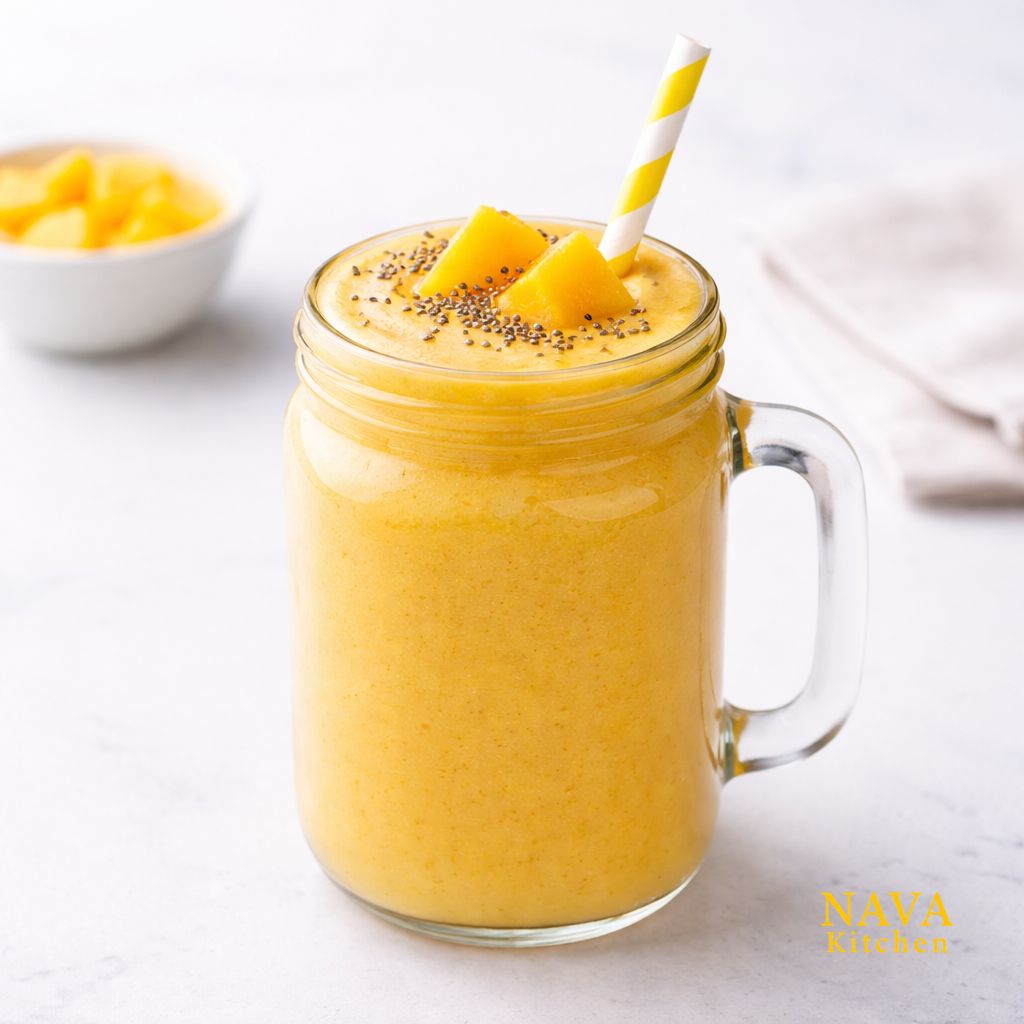
Ingredients:
- 1 banana
- 2 cups frozen mango
- 1½ cups kefir
Method:
Start Cooking- Add all ingredients to a blender.
- Blend until smooth and creamy.
- Adjust texture if needed (add a splash of kefir if too thick). Bon appétit.
Kitchen Tools:
- Serving glasses
Notes:
- Frozen mango makes it thick and cold without ice.
- Kefir adds a slight tang, similar to a drinkable yogurt.
- If it tastes too tart, add 1–2 teaspoons honey.
- Add 1 tablespoon chia seeds for extra nutrition.
- Blend in a few ice cubes for a lighter texture.
- Add a squeeze of orange juice for brightness.
- Use 1 cup kefir + ½ cup milk for a milder, less tangy flavor.
- Serve immediately while cold and creamy. Perfect for breakfast or a quick refresher.
Nutrition:
FROM THE PANTRY
Kefir
WHY WE LOVE IT
Light, tangy, and naturally probiotic, it adds creamy texture and nourishment to smoothies and is just as good to drink on its own.
A LITTLE STORY
Kefir originated over 1,000 years ago in the Caucasus Mountains, a region between Europe and Asia. It was first discovered by nomadic herders when milk stored in animal-skin bags naturally fermented. In the early 1900s, it began to be produced commercially as its benefits became more widely recognized.
DID YOU KNOW?
Kefir contains 30 to 60 different strains of beneficial bacteria and yeast.
It is a good source of protein, calcium, magnesium, and vitamin K2.
The fermentation process breaks down up to 99% of the lactose in milk, making it suitable for many people with lactose intolerance.
The word “kefir” comes from the Turkish word keyif, meaning “feeling good.”