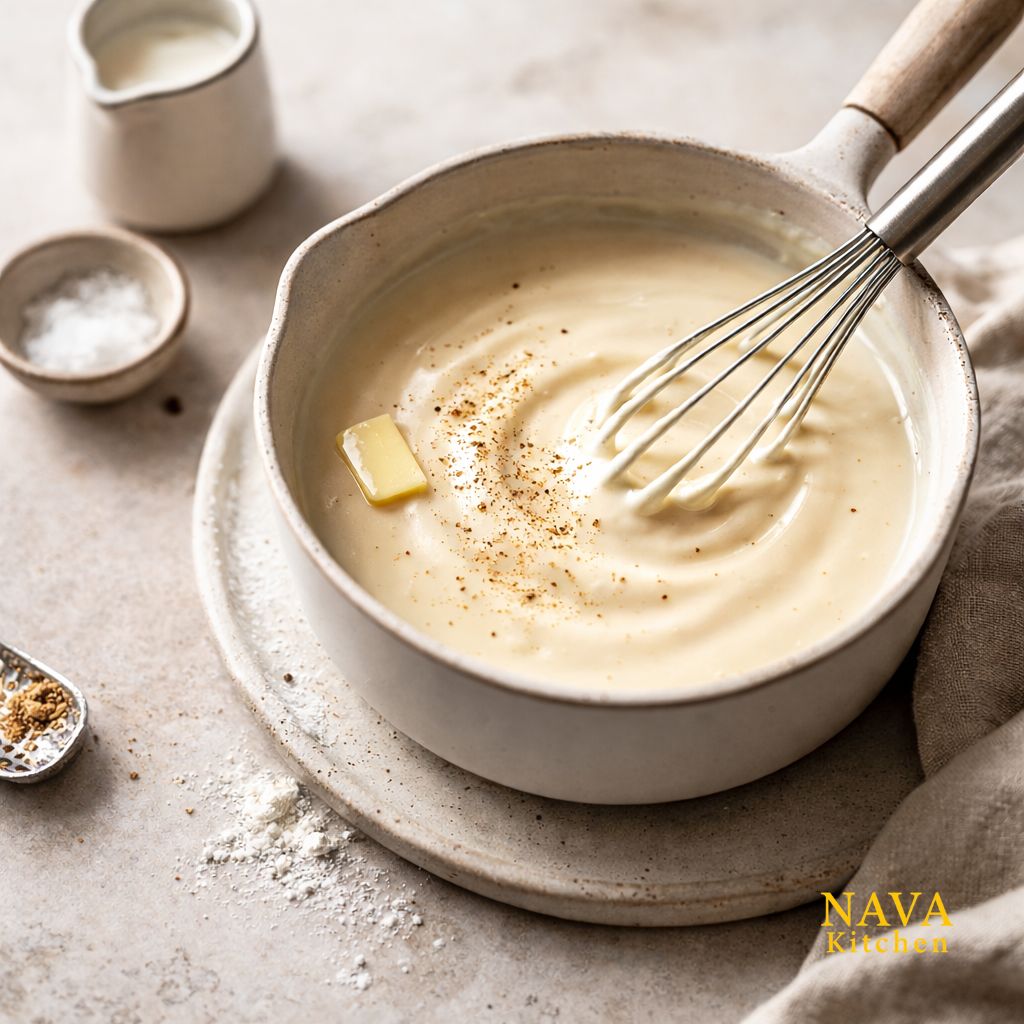
Béchamel Sauce
Smooth and versatile, it’s one of the foundational sauces of cooking and the base for countless baked and layered dishes.
Servings: 1 batch
Ingredients:
- 2 cups milk, warm
- 2 tbsp flour
- 2 tbsp butter
- Salt, to taste
- Black pepper, to taste
Method:
Start Cooking- Melt butter in a saucepan over medium heat.
- Whisk in flour and cook for 1–2 minutes, don’t let it brown.
- Slowly whisk in warm milk until smooth.
- Simmer gently, stirring often, until thick and creamy, about 5 minutes.
- Season with salt and black pepper.
- This one batch makes about 2 cups of smooth, classic béchamel. Bon appétit.
Kitchen Tools:
Notes:
From the kitchen
- Classic béchamel is traditionally made with butter only.
- For a lighter version, you can use 1 tablespoon butter + 1 tablespoon olive oil instead of 2 tablespoons butter.
- Olive oil adds a softer flavor and a lighter feel while still keeping the sauce smooth.
- Warm milk blends more easily and helps prevent lumps.
- Whisk constantly while simmering for the creamiest texture.
- For oven-baked pasta, use 3 tablespoons flour instead of 2 for a thicker sauce that clings to pasta and holds up in the oven.
For a lighter option, you can use 2 tablespoons butter + 1 tablespoons olive oil instead of all butter. - For lasagna, double the recipe (4 cups milk total) and use 4 tablespoons butter + 4 tablespoons flour for a classic, silky béchamel that spreads easily and sets between layers.
For a lighter option, you can use 2 tablespoons butter + 2 tablespoons olive oil + 4 tablespoons flour instead.
- Add a pinch of nutmeg for a classic touch.
- Stir in grated Parmesan or mozzarella for a quick cheese sauce.
- For a lighter version, replace half (or all) of the butter with olive oil.
- Swap a little milk for cream if you’d like it richer.
- Use béchamel for lasagna, oven-baked pasta, vegetable casseroles, or spoon it over roasted cauliflower, broccoli, potatoes, or sautéed greens.
- As a finishing sauce: Spoon warm béchamel over roasted cauliflower, broccoli, potatoes, or sautéed greens just before serving.
- For baked dishes: Pour béchamel over cooked vegetables, optionally add cheese, then bake until bubbly and lightly golden for a gratin-style dish.
Your notes stay on this device for now. Log in to keep them with your account and access them anytime.
Share your plate
Mention @thenavakitchen or tag #thenavakitchen!FROM THE PANTRY
Béchamel sauce
WHY WE LOVE IT
Its creamy, neutral profile makes it a true culinary blank canvas, adding structure to everything from lasagna to mac and cheese. Once you learn it, you can easily turn it into cheese sauce, onion sauce, or customize it with simple additions.
A LITTLE STORY
Named after King Louis XIV’s steward, Louis de Béchamel, the sauce was likely an evolution of Italian “glue sauce” perfected and codified by French chefs in the 17th century.
DID YOU KNOW?
Originally a luxury for the elite due to the cost of fresh milk, it is traditionally finished with a secret pinch of nutmeg to elevate its simple three-ingredient base. It’s pronounced bay-shah-mel.
Leave a note