Coddled Eggs
Soft, creamy coddled eggs with two flavorful combinations: Havarti and arugula or spinach and feta. Perfect with toasted bread.
Servings: 2
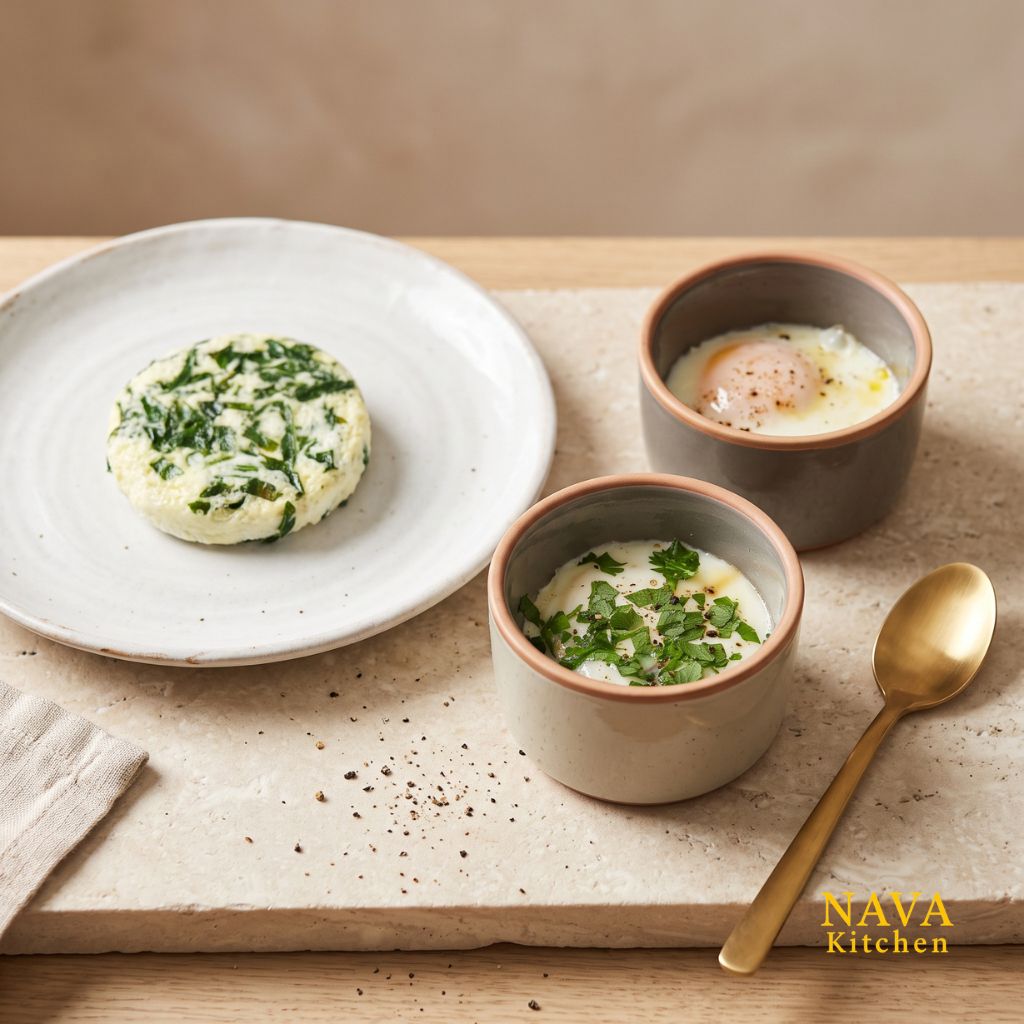
Ingredients:
Havarti & Arugula
- 1 egg
- ½ tsp butter
- 1 tsp milk
- 1 tbsp Havarti cheese, finely chopped
- 3 –4 arugula leaves, chopped
- 1 tsp green onion, finely chopped
- Salt and freshly ground black pepper, to taste
Spinach & Feta
- 1 egg
- ½ tsp butter
- 1 tsp milk
- 1 tbsp feta cheese, crumbled
- 3 –4 baby spinach leaves, chopped
- 3 –4 fresh parsley leaves, finely chopped
- Freshly ground black pepper, to taste
Method:
Start CookingPrepare the pot
- Place a steaming rack inside a large pot. Add enough water to reach approximately halfway up the sides of the ramekins when placed on the rack. Bring the water to a boil.
Butter the ramekins
- Add ½ teaspoon of butter to each 6 oz ramekin. Gently melt the butter and use a pastry brush to coat the bottom and sides evenly.
Assemble the Havarti & Arugula egg
- Add the chopped arugula, green onion, and Havarti to the first ramekin. Carefully crack an egg on top. Add 1 teaspoon of milk and season with salt and black pepper.
Assemble the Spinach & Feta egg
- Add the raw chopped spinach and crumbled feta to the second ramekin. Carefully crack an egg on top. Add 1 teaspoon of milk and finish with parsley and black pepper.
Steam the eggs
- Reduce the heat to maintain a gentle simmer. Carefully place the ramekins on the rack and cover the pot with its lid.
Check the eggs
- Begin checking after 7 minutes. Around 7 minutes produces a softer yolk for dipping bread, while 9 minutes gives a slightly thicker consistency. Cooking times may vary. Continue cooking if the whites are still translucent.
Serve
- Carefully remove the ramekins from the pot. Serve directly in the ramekins, or gently invert them onto individual plates. Pair with toasted bread for dipping. Bon appétit!
Kitchen Tools:
- Large heavy-bottomed pot with lid
- Steamer basket or steaming rack
- Ramekins 6 oz
Notes:
From the kitchen
- Coddled eggs are a simple way to turn everyday ingredients into a warm, comforting breakfast. Gently steamed in individual buttered ramekins, the eggs cook alongside cheese, fresh greens, and herbs.
- The Havarti and arugula combination is rich and creamy, while spinach and feta offer a lighter, fresher flavor. Both are delicious with toasted bread.
- For the best texture, keep the water at a gentle simmer rather than a rolling boil. Cooking times may vary depending on your ramekins and preferred egg consistency. For food safety, eggs should be cooked until both the whites and yolks are firm. If you prefer softer yolks, consider using pasteurized eggs.
- You don’t need a special egg coddler to make coddled eggs. A large pot with a lid and a steaming rack work beautifully. A steamer basket that securely holds the ramekins is another convenient option. Just keep the ramekins elevated above the bottom of the pot and maintain a gentle simmer.
- Experiment with your favorite cheeses, greens, and herbs.
- Try Parmesan for a sharper flavor, mozzarella for a milder finish, or sautéed mushrooms for an earthy twist.
- Chives, green onions, and fresh parsley are easy additions.
- Add a teaspoon of heavy cream for a richer, silkier texture, or use milk for a lighter option.
- Use two eggs or add your favorite cooked meat for extra protein.
- Serve the eggs warm in their ramekins or gently turn them out onto individual plates. Pair with toasted sourdough or crusty bread for dipping into the golden yolks.
Your notes stay on this device for now. Log in to keep them with your account and access them anytime.
Nutrition:
Calories: 134 kcal | Carbohydrates: 1 g | Protein: 9 g | Fat: 10 g | Saturated Fat: 5 g | Polyunsaturated Fat: 1 g | Monounsaturated Fat: 3 g | Trans Fat: 0.2 g | Cholesterol: 184 mg | Sodium: 236 mg | Potassium: 110 mg | Fiber: 0.2 g | Sugar: 1 g | Vitamin A: 751 IU | Vitamin C: 3 mg | Calcium: 127 mg | Iron: 1 mg
Share your plate
Mention @thenavakitchen or tag #thenavakitchen!FROM THE PANTRY
Coddling Eggs
WHY WE LOVE IT
Coddled eggs are simple, delicious, and endlessly customizable. Unlike poached eggs, they cook in individual containers, making it easy to add your favorite cheeses, vegetables, and herbs. Best of all, no special egg coddler is needed.
A LITTLE STORY
Egg coddlers became especially popular in Victorian Britain. These small, often beautifully decorated porcelain vessels were designed for gently cooking eggs in hot water and serving them straight at the breakfast table.
DID YOU KNOW?
The word coddle means to treat something gently or with special care. In cooking, it describes preparing eggs using gentle heat.
Traditional egg coddlers are small, covered containers placed in hot water, allowing eggs to cook slowly while preserving their delicate texture.
Leave a note