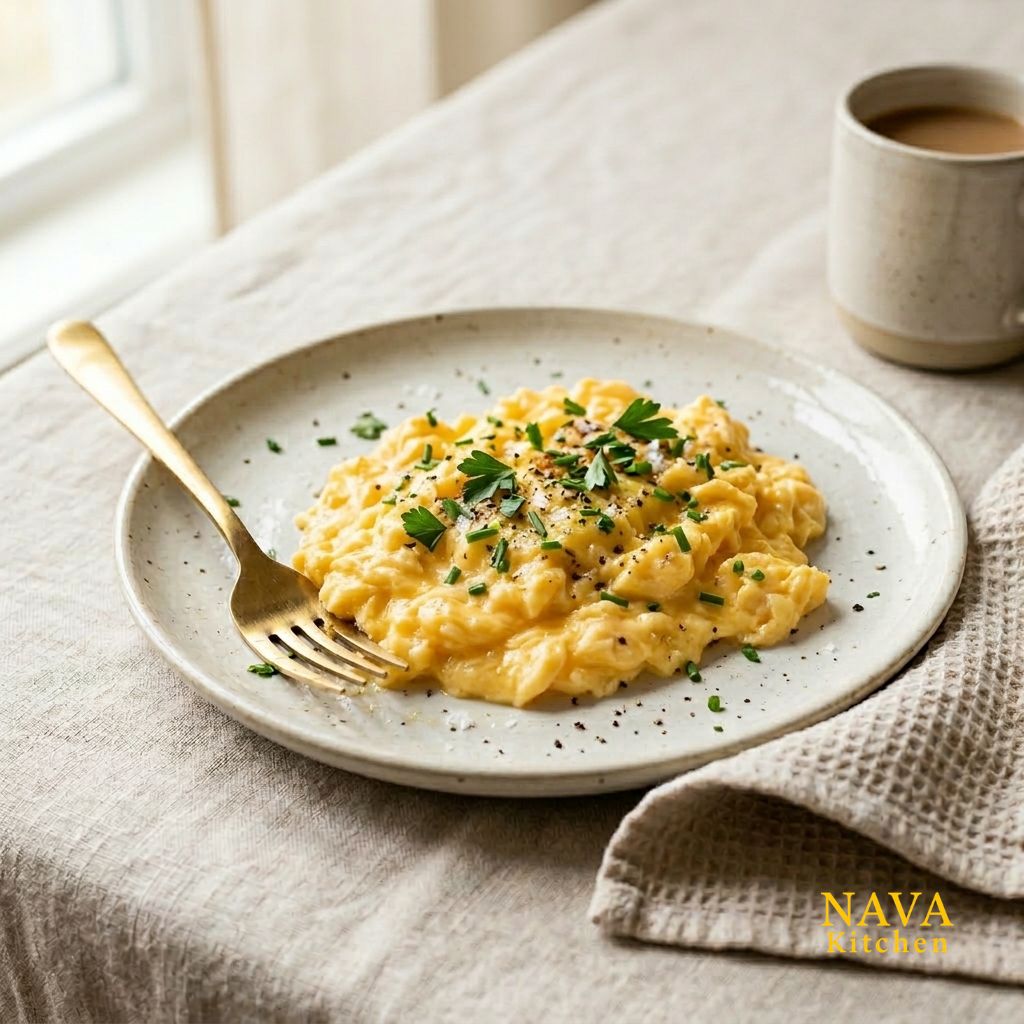
Scrambled Eggs
Soft, creamy scrambled eggs cooked gently with butter. A quick and comforting breakfast ready in minutes.
Servings: 1
Ingredients:
- 3 eggs
- 1 tbsp butter
- 1 tbsp milk, optional
- Salt and black pepper, to taste
Method:
Start Cooking- Crack the eggs into a bowl. Add salt and pepper and whisk until fully combined.
- Melt butter in a small skillet over medium-low heat.
- Pour the eggs into the pan and let them sit for about 10 seconds, then gently stir with a spatula.
- Continue slowly stirring and folding the eggs as they cook, forming soft curds.
- Remove from heat while the eggs are still soft and slightly glossy. They will continue cooking from residual heat.
- Serve immediately. Bon appétit.
Kitchen Tools:
Notes:
From the kitchen
- Low heat gives creamy eggs. High heat makes them dry.
- Butter improves flavor and texture.
- Stop early. Eggs keep cooking after leaving the pan.
- Sweep and fold method: Once the eggs begin to set at the edges, use a spatula to sweep them from the outer edges toward the center in long, slow strokes. Fold the cooked portions over the raw eggs, allowing the liquid eggs to flow into the empty space. Repeat gently until large, soft curds form and the eggs are mostly set. This method allows the eggs to cook slowly and creates tender, creamy curds.
- Both omelettes and scrambled eggs start with beaten eggs, but the cooking method is different. Scrambled eggs are stirred gently as they cook, creating soft curds. Omelettes are cooked mostly undisturbed in a flat layer and then folded over fillings like cheese, vegetables, or herbs.
- If you enjoy eggs for breakfast, you may also like this cheesy omelette recipe.
- Cheesy: add shredded cheddar or feta at the end.
- Herby: add parsley, chives, or dill.
- Mediterranean: add tomatoes, olives, and feta.
- Veggie: sauté mushrooms or spinach before adding eggs.
- Creamy: whisk in 1–2 tbsp yogurt before cooking.
- Protein-Rich: stir in 2–3 tbsp cottage cheese for extra protein.
- Serve scrambled eggs warm with toasted bread, fresh herbs, or sliced avocado.
- They also pair well with roasted tomatoes, breakfast potatoes, or a simple salad for a light meal.
Your notes stay on this device for now. Log in to keep them with your account and access them anytime.
Nutrition:
Calories: 298 kcal | Carbohydrates: 2 g | Protein: 17 g | Fat: 24 g | Saturated Fat: 12 g | Polyunsaturated Fat: 3 g | Monounsaturated Fat: 8 g | Trans Fat: 1 g | Cholesterol: 523 mg | Sodium: 283 mg | Potassium: 208 mg | Sugar: 1 g | Vitamin A: 1087 IU | Calcium: 96 mg | Iron: 2 mg
Share your plate
Mention @thenavakitchen or tag #thenavakitchen!